
The Invincible Six (1970): Heroism in the Middle East

rashemamelson.org – “The Invincible Six,” a 1970 American-Iranian adventure film, is directed by Jean Negulesco and stars Stuart Whitman, Elke Sommer, and Curd Jürgens. The film is an intriguing blend of action, adventure, and cultural exploration set in the heart of Iran. This article delves into the film’s plot, characters, and its significance in the adventure genre.

Plot Overview

Set in the picturesque landscapes of Iran, “The Invincible Six” follows a group of international jewel thieves who find themselves in an unexpected situation. After a failed attempt to steal the crown jewels of Iran, the six thieves, led by a character known as Tex, played by Stuart Whitman, take refuge in a small Iranian village. As they adapt to their new surroundings, they become the village’s unlikely protectors against a band of ruthless local bandits. This transformation from criminals to heroes forms the crux of the film, blending themes of redemption and courage.

Characters and Performances

Stuart Whitman leads the cast with a compelling performance as Tex, the adventurous American who spearheads the group’s transformation. Elke Sommer plays Zari, adding depth and charm to the narrative with her engaging performance. Curd Jürgens as Baron Karl von Bitterhofen brings a sense of sophistication and intrigue to the film. The supporting cast, including Ian Ogilvy and James Mitchum, contribute to the dynamic and diverse ensemble, enhancing the film’s adventurous spirit.

Cinematic Elements

Directed by Jean Negulesco, “The Invincible Six” captures the vibrant and contrasting landscapes of Iran, offering a visually rich backdrop for the story. The film’s action sequences are well-executed, maintaining a balance between suspense and excitement. The screenplay, inspired by “The Heroes of Yucca,” weaves humor and drama into the adventure, creating a narrative that is both entertaining and engaging.

Impact and Legacy

Though not as widely recognized as other films of its era, “The Invincible Six” remains an interesting artifact of cross-cultural filmmaking during the 1970s. It showcases a blend of Western and Middle Eastern elements, highlighting themes of redemption, unity, and heroism. The film’s unique setting and narrative structure have contributed to its enduring appeal among fans of classic adventure cinema.

Conclusion

In conclusion, “The Invincible Six” offers an adventurous and captivating tale of transformation and heroism. With its engaging plot, memorable characters, and exotic setting, the film provides a unique cinematic experience that continues to resonate with audiences. Whether you’re a fan of classic adventure films or interested in stories of redemption and courage, “The Invincible Six” delivers an entertaining and thought-provoking journey.
Tales from the East and West: Cold War Spies

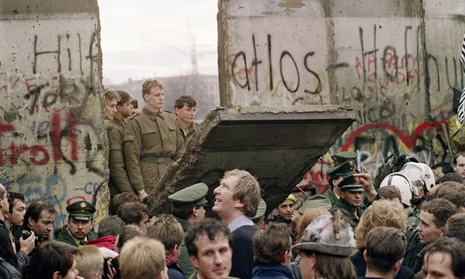
rashemamelson.org – During the decades-long standoff between the Eastern and Western blocs, the Cold War was not only fought on the battlefield of ideology but also in the shadows, where spies from both sides engaged in a clandestine dance of deception and counter-deception. These spies were the unsung soldiers of the Cold War, operating under the cover of darkness to gather intelligence, sow disinformation, and sometimes even to assassinate key figures. Their stories are a blend of intrigue, betrayal, and daring that have captivated the public imagination for decades.

The East: Guardians of the Iron Curtain

In the Eastern Bloc, the KGB of the Soviet Union was the most feared and respected intelligence agency. Its operatives were trained to be masters of espionage, sabotage, and subversion. One of the most notorious KGB spies was Colonel Rudolf Abel, who was arrested in the United States in 1957 for espionage. Abel’s calm demeanor and refusal to divulge any information, even under the threat of the electric chair, earned him a reputation as a Cold War spy legend.

The Stasi, East Germany’s Ministry for State Security, was another formidable force in the Eastern espionage arsenal. With a vast network of informants, the Stasi was known for its ruthless tactics and its ability to infiltrate the highest levels of Western governments and organizations. Markus Wolf, the head of the Stasi’s foreign intelligence, was so successful that he was dubbed “the man without a face” by Western intelligence agencies, as they struggled to identify him for years.

The West: Defenders of Democracy

On the Western side, the Central Intelligence Agency (CIA) and the Secret Intelligence Service (MI6) of the United Kingdom were the primary agencies tasked with countering the Eastern threat. The CIA’s operations during the Cold War were as varied as they were secretive, from the overthrow of foreign governments to the recruitment of double agents. One of the most famous CIA operations was the U-2 spy plane program, which provided crucial aerial reconnaissance of Soviet military installations until the downing of Gary Powers’ U-2 in 1960.

MI6, with its storied history and the inspiration for James Bond, played a key role in the Cold War. Kim Philby, an MI6 officer who was later revealed to be a Soviet double agent, is a testament to the complexity of Cold War espionage. His betrayal sent shockwaves through the Western intelligence community and highlighted the dangers of moles within the ranks.

Double Agents and Defectors: The Ultimate Double Cross

Perhaps the most intriguing figures of the Cold War espionage world were the double agents and defectors. These individuals played both sides, either for ideological reasons, personal gain, or under duress. The case of Oleg Penkovsky, a Soviet military intelligence officer who provided the West with crucial information about Soviet missile capabilities during the Cuban Missile Crisis, is a prime example. His espionage work helped to avert a potential nuclear war, but his capture and execution by the KGB were a stark reminder of the deadly seriousness of the spy game.

Aldrich Ames and Robert Hanssen, both CIA officers who spied for the Soviet Union and later Russia, are examples of the damage that can be done by a mole within the intelligence community. Their betrayals resulted in the deaths of numerous Soviet and Russian agents working for the United States and severely compromised Western intelligence operations.

The Legacy of Cold War Spies

The tales of Cold War spies are a reminder of the human cost of espionage and the complex moral and ethical dilemmas faced by those who engage in it. While some spies were motivated by patriotism or ideology, others were driven by personal gain or the thrill of the clandestine life. Regardless of their motivations, the actions of Cold War spies had far-reaching consequences that continue to influence international relations to this day.

As the world has moved on from the Cold War, the methods and technologies of espionage have evolved, but the fundamental nature of the spy’s trade remains the same. The stories of Cold War spies serve as a window into a bygone era, offering lessons in loyalty, betrayal, and the enduring struggle for information dominance in the shadowy world of international espionage.