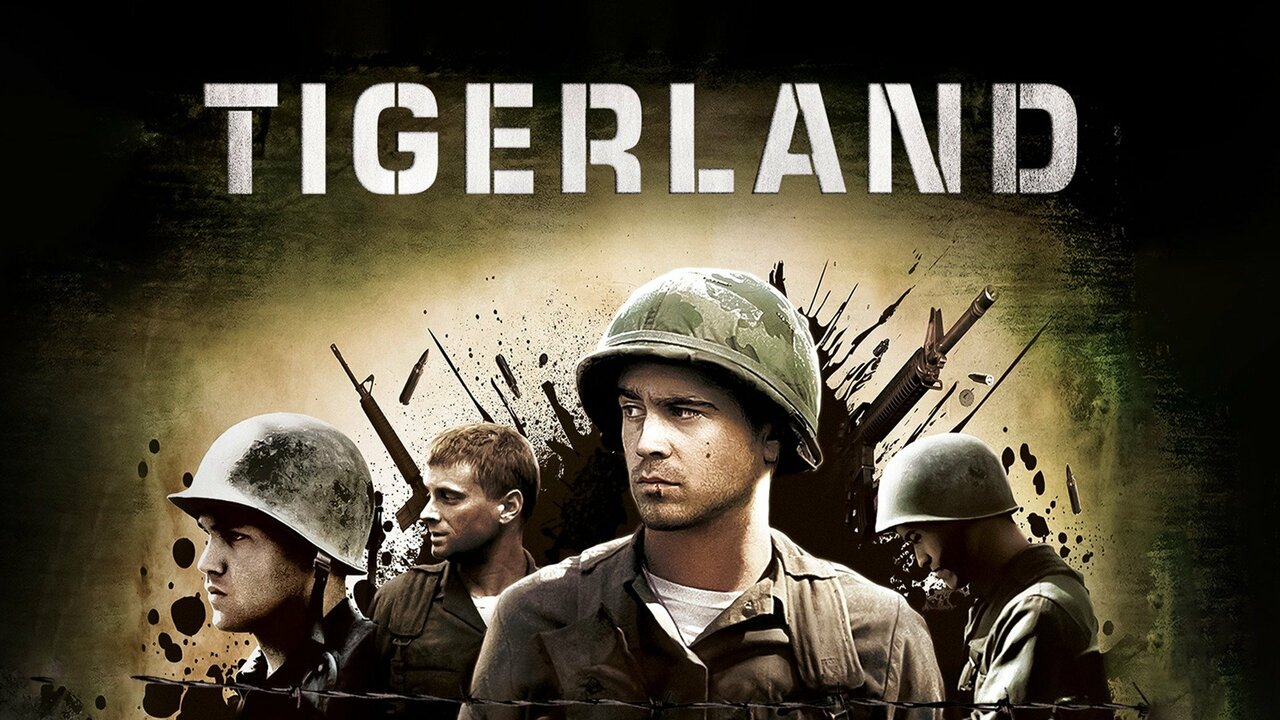
Tigerland (2000): A Gritty Exploration of Pre-Vietnam War Training

rashemamelson.org – “Tigerland,” directed by Joel Schumacher, is a 2000 war drama that provides a raw and realistic portrayal of the final stages of U.S. Army training before deployment to Vietnam. The film is notable for its intense performances and its focus on the psychological and moral challenges faced by soldiers. This article delves into the narrative structure, key themes, and the cultural impact of “Tigerland.”

The Narrative and Characters

Set in 1971, “Tigerland” follows a group of young recruits at Fort Polk, Louisiana, as they undergo Advanced Infantry Training. The story centers on Private Roland Bozz, played by Colin Farrell, a rebellious and charismatic draftee who questions authority and challenges the military establishment. Bozz’s anti-authoritarian attitude and natural leadership skills make him both a hero and an outcast among his fellow soldiers.

The film takes its name from “Tigerland,” a training ground designed to simulate the conditions of Vietnam. Here, the recruits must confront not only the physical demands of military training but also the psychological strains of preparing for war. Bozz’s interactions with fellow soldiers, including Private Paxton, portrayed by Matthew Davis, highlight the diverse reactions of individuals facing the prospect of combat.

Themes and Symbolism

“Tigerland” explores themes of individuality, authority, and the moral complexities of military life. At its core, the film examines the struggle between conformity and individuality within the rigid structure of the military. Bozz’s character embodies this tension, as he navigates the thin line between insubordination and leadership.

The film’s realistic depiction of military training emphasizes the dehumanizing effects of preparing for war. Through its gritty cinematography and documentary-style approach, “Tigerland” captures the raw emotions and psychological turmoil experienced by soldiers. The film also raises questions about the nature of courage and the moral dilemmas faced by those who oppose war on ethical grounds.

Cultural Impact and Legacy

“Tigerland” received critical acclaim for its authentic portrayal of military training and its focus on character-driven storytelling. Colin Farrell’s breakout performance was particularly praised for its depth and intensity, marking a significant moment in his acting career.

While “Tigerland” did not achieve major commercial success, its cultural impact lies in its honest depiction of the challenges faced by soldiers before entering combat. The film resonates with audiences as a thought-provoking exploration of individualism and morality in the face of war.

Conclusion

“Tigerland” stands out as a compelling and realistic portrayal of the psychological and moral challenges encountered by soldiers during military training. Through its focus on character development and its exploration of complex themes, the film provides a sobering reflection on the human experience of preparing for war. As a cinematic exploration of individuality and authority, “Tigerland” continues to engage viewers with its gritty realism and poignant storytelling.
Tales from the East and West: Cold War Spies

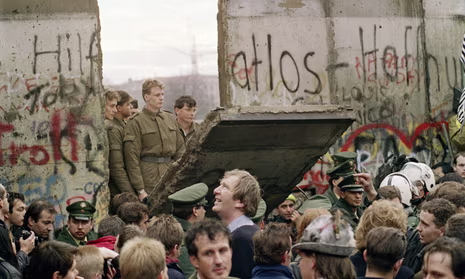
rashemamelson.org – During the decades-long standoff between the Eastern and Western blocs, the Cold War was not only fought on the battlefield of ideology but also in the shadows, where spies from both sides engaged in a clandestine dance of deception and counter-deception. These spies were the unsung soldiers of the Cold War, operating under the cover of darkness to gather intelligence, sow disinformation, and sometimes even to assassinate key figures. Their stories are a blend of intrigue, betrayal, and daring that have captivated the public imagination for decades.

The East: Guardians of the Iron Curtain

In the Eastern Bloc, the KGB of the Soviet Union was the most feared and respected intelligence agency. Its operatives were trained to be masters of espionage, sabotage, and subversion. One of the most notorious KGB spies was Colonel Rudolf Abel, who was arrested in the United States in 1957 for espionage. Abel’s calm demeanor and refusal to divulge any information, even under the threat of the electric chair, earned him a reputation as a Cold War spy legend.

The Stasi, East Germany’s Ministry for State Security, was another formidable force in the Eastern espionage arsenal. With a vast network of informants, the Stasi was known for its ruthless tactics and its ability to infiltrate the highest levels of Western governments and organizations. Markus Wolf, the head of the Stasi’s foreign intelligence, was so successful that he was dubbed “the man without a face” by Western intelligence agencies, as they struggled to identify him for years.

The West: Defenders of Democracy

On the Western side, the Central Intelligence Agency (CIA) and the Secret Intelligence Service (MI6) of the United Kingdom were the primary agencies tasked with countering the Eastern threat. The CIA’s operations during the Cold War were as varied as they were secretive, from the overthrow of foreign governments to the recruitment of double agents. One of the most famous CIA operations was the U-2 spy plane program, which provided crucial aerial reconnaissance of Soviet military installations until the downing of Gary Powers’ U-2 in 1960.

MI6, with its storied history and the inspiration for James Bond, played a key role in the Cold War. Kim Philby, an MI6 officer who was later revealed to be a Soviet double agent, is a testament to the complexity of Cold War espionage. His betrayal sent shockwaves through the Western intelligence community and highlighted the dangers of moles within the ranks.

Double Agents and Defectors: The Ultimate Double Cross

Perhaps the most intriguing figures of the Cold War espionage world were the double agents and defectors. These individuals played both sides, either for ideological reasons, personal gain, or under duress. The case of Oleg Penkovsky, a Soviet military intelligence officer who provided the West with crucial information about Soviet missile capabilities during the Cuban Missile Crisis, is a prime example. His espionage work helped to avert a potential nuclear war, but his capture and execution by the KGB were a stark reminder of the deadly seriousness of the spy game.

Aldrich Ames and Robert Hanssen, both CIA officers who spied for the Soviet Union and later Russia, are examples of the damage that can be done by a mole within the intelligence community. Their betrayals resulted in the deaths of numerous Soviet and Russian agents working for the United States and severely compromised Western intelligence operations.

The Legacy of Cold War Spies

The tales of Cold War spies are a reminder of the human cost of espionage and the complex moral and ethical dilemmas faced by those who engage in it. While some spies were motivated by patriotism or ideology, others were driven by personal gain or the thrill of the clandestine life. Regardless of their motivations, the actions of Cold War spies had far-reaching consequences that continue to influence international relations to this day.

As the world has moved on from the Cold War, the methods and technologies of espionage have evolved, but the fundamental nature of the spy’s trade remains the same. The stories of Cold War spies serve as a window into a bygone era, offering lessons in loyalty, betrayal, and the enduring struggle for information dominance in the shadowy world of international espionage.